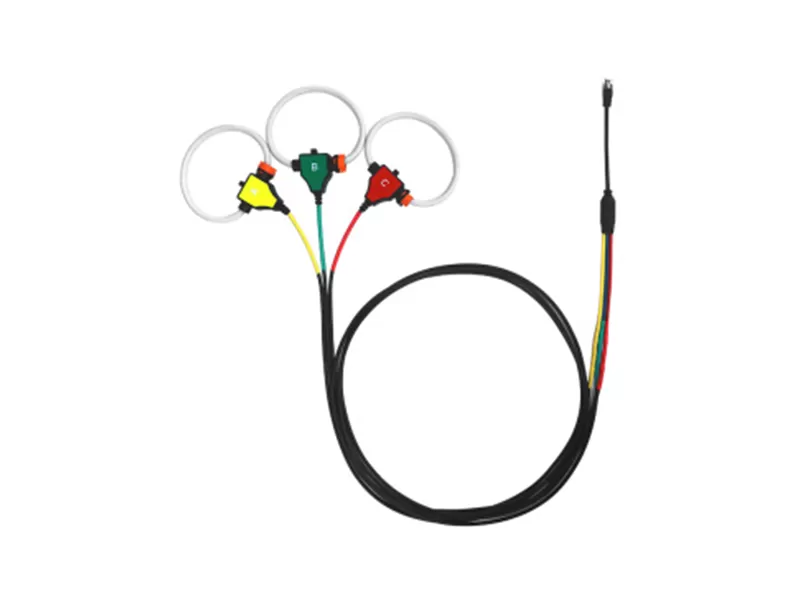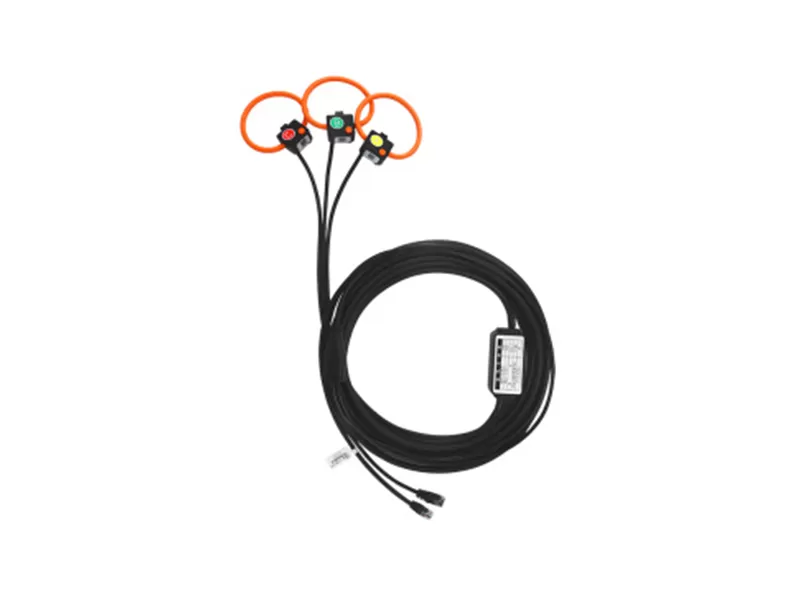

TFY has worked deeply in municipal infrastructure projects and has seen a clear trend: power quality requirements are getting higher, and live (no-outage) installation is becoming a must. Because of this, the limits of traditional current transformers (CTs) in low-voltage grid retrofit projects are becoming more obvious. In this situation, flexible current sensors are a better and more efficient choice for modern power monitoring systems.
In water treatment plants, industrial power systems, and municipal projects, low-voltage switchboard upgrades often face real issues:
The system must keep running, so power outages are not allowed
Space inside the cabinet is tight, so installation space is limited
There are non-linear loads, such as VFDs
Power quality monitoring needs are increasing
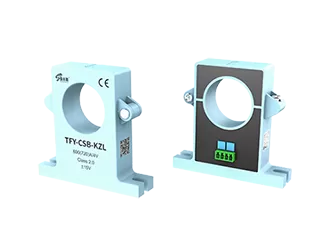
Traditional CTs often need a shutdown for installation, they are large, they can saturate, and they cannot capture harmonic signals well. Because of this, they do not fit modern data-based energy management systems.
Based on TFY project experience, flexible current sensors show clear advantages in key areas:
| Item | Traditional CT | Flexible current sensor |
| Measurement accuracy | Poor at small current; limited linearity | High accuracy across the full range |
| Installation | Needs shutdown and wire removal | Split-core design; supports live installation |
| Magnetic saturation | Easy to saturate | No magnetic core, so no saturation |
| Bandwidth | Mainly 50/60 Hz | Wide band; supports harmonic measurement |
| DC immunity | DC parts can cause distortion | Strong against DC interference |
| Service life | Core aging; needs maintenance | Passive design; stable for a long time |
It has very good linearity. It can measure accurately from small current to large current. This helps energy monitoring and system optimization.
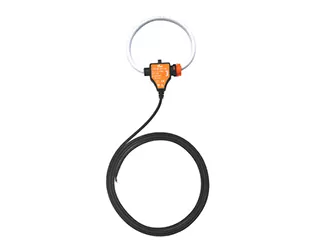
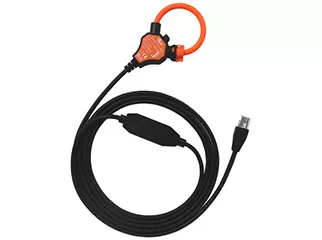
Its split and flexible structure means no wire removal is needed. It can be installed without a shutdown. This greatly improves retrofit work in cabinets with limited space.
Because there is no iron core, it can still work well during inrush current and fault current in motor and pump systems.
Modern water treatment and industrial systems often use VFDs and other non-linear loads. Flexible sensors can detect harmonics and transient signals. This supports more reliable power quality analysis.
In systems with DC parts or non-linear loads, it can keep measurement accuracy. This makes monitoring more reliable.
There is no core aging and no mechanical wear. Service life can be more than 10 years. This fits long-term industrial and municipal use, and maintenance needs are very low.
In municipal projects, TFY widely uses flexible current sensors in:
Low-voltage power system retrofit projects
Energy efficiency management systems
Industrial power monitoring
Live installation and upgrade projects
The value is not only simpler installation. It also gives more reliable, higher-quality data for system operation and optimization.
Low-voltage grids are moving toward smarter and more efficient systems. Because of this, flexible current sensors are becoming a main replacement for traditional CTs. They are flexible to install, accurate, wide-band, and stable for a long time. So they fit retrofit projects that are sensitive to downtime, space, and data quality. For municipal and industrial use, choosing flexible current sensors is not only a hardware upgrade. It is also a key step toward smart power monitoring and efficient system management.